


₹329
₹399
18% off
You save ₹70
Inclusive of all taxes
20 people viewing now
Shop with peace of mind
Make it special+₹ 49.00

Gift Wrapping (Prepaid Orders Only)
Add a clean, gift-ready wrap with your order.
Qty
Added to cart successfully.
Bulk / wholesale enquiry
Tell us how many you need and we'll send you our best price on WhatsApp.
 Interpretation of Dreams
Opens WhatsApp with your details pre-filled. We reply with the best price.
Offers


Frequently bought together
Total:
Considered the father of psychoanalysis, Sigmund Freud (1856-1939) revolutionizes the study of dreams with his work the Interpretation Of Dreams. Freud begins to analyze dreams in order to understand aspects of personality as they relate to pathology. The book introduces Freud's theory of the unconscious with respect to dream interpretation. Dreams, in Freud's view, were all forms of "wish-fulfillment" - attempts by the unconscious to resolve a conflict of some sort. According to Freud, dreams always have a manifest and latent content. The manifest content is what the dream seems and latent content. The manifest content is what the dream seems to be sying. It is often bizarre and nonsensical. The latent content is what the dream is really trying to say. Despite Freud's tendency to over-generalize, his lack of scientific evidence, his overemphasis on sex, and his frequently chauvinistic viewpoints, this seminal work remains important in the history of psychology. The Interpretation of Dreams marked the beginning of psychoanalysis.
Product Highlights
Full specifications at a glance
Publisher
Lexicon Publications
Language
English
Format
Paperback
ISBN-13
9789380703251

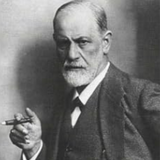
Sigmund Freud was born in 1856 in Moravia; between the ages of four and eighty-two his home was in Vienna: in 1938 Hitler's invasion of Austria forced him to seek asylum in London, where he died in the following year. His career began with several years of brilliant work on the anatomy and physiology of...
More by this author · 2 in store

