Skip to product information
1 of 2
Books-Fiction

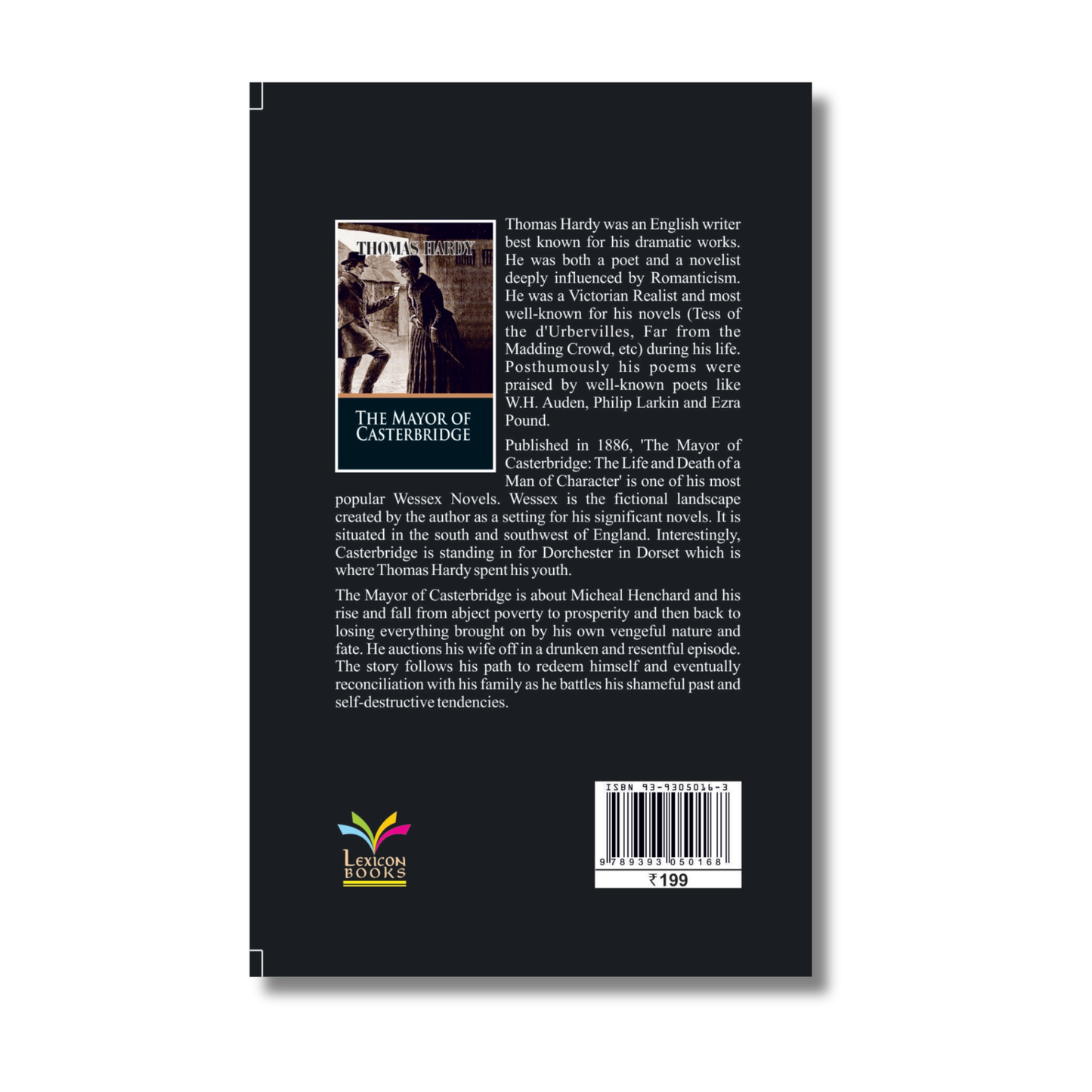
The Mayor Of Casterbridge

₹199

Inclusive of all taxes

36 people viewing now
Shop with peace of mind
Make it special+₹ 49.00
Qty
Added to cart successfully.
Offers
Share
WhatsApp
Link copied.
View full details

The Mayor of Casterbridge displays the influence of Hardy's upbringing, rural background, and architectural studies. His characters are primitive and exhibit all the passions, hates, loves and jealousies that rustic life seems to inspire. Yet these characters are at all times real because they are based on people he had grown up with, people he had heart about in legends and ballads, people whose tragic histories he had unearthed during his early architectural apprenticeship. In this novel Hardy dramatizes human condition as a struggle between man and man, and between man and his fate. Usually it is fate that wins. Yet the victim of fate, Henchard, is also the greatest offender against morality, which would indicate purpose in the suffering he endures. The novel ends on a note of hope because of Henchard's strength of will and his determination to undergo suffering and deprivation in order to expiate his sins.

Product Highlights
Full specifications at a glance
Publisher ‏
- ‎ Lexicon Publication
Language ‏
- ‎ English
Format
Paperback
ISBN-13
9789393050168
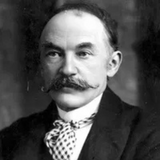
Thomas Hardy

Thomas Hardy

Thomas Hardy was born in a cottage in Higher Bockhampton, near Dorchester, on 2 June 1840. He was educated locally and at sixteen was articled to a Dorchester architect, John Hicks. In 1862 he moved to London and found employment with another architect, Arthur Blomfield. He now began to write poetry and published an essay. By 1867 he had returned to Dorset to work as Hicks's assistant and began his first (unpublished) novel, The Poor Man and the Lady. On an architectural visit to St Juliot in Cornwall in 1870 he met his first wife, Emma Gifford. Before their marriage in 1874 he had published four novels and was earning his living as a writer. More novels followed and in 1878 the Hardys moved from Dorset to the London literary scene. But in 1885, after building his house at Max Gate near Dorchester, Hardy again returned to Dorset. He then produced most of his major novels: The Mayor of Casterbridge (1886), The Woodlanders (1887), Tess of the D'Urbervilles (1891), The Pursuit of the Well-Beloved (1892) and Jude the Obscure (1895). Amidst the controversy caused by Jude the Obscure, he turned to the poetry he had been writing all his life. In the next thirty years he published over nine hundred poems and his epic drama in verse, The Dynasts. After a long and bitter estrangement, Emma Hardy died at Max Gate in 1912. Paradoxically, the event triggered some of Hardy's finest love poetry. In 1914, however, he married Florence Dugdale, a close friend for several years. In 1910 he had been awarded the Order of Merit and was recognized, even revered, as the major literary figure of the time. He died on 11 January 1928. His ashes were buried in Westminster Abbey and his heart at Stinsford in Dorset.
About the author Thomas Hardy
English Victorian novelist and poet, known for tragic portrayals of rural Wessex life

Thomas Hardy was born in a cottage in Higher Bockhampton, near Dorchester, on 2 June 1840. He was educated locally and at sixteen was articled to a Dorchester architect, John Hicks. In 1862 he moved to London and found employment with another architect, Arthur Blomfield. He now began to write poetry and published an essay....